U.S. releases lower fuel economy standards
Efficiency goals cut back as gas prices soar; critics cite environmental risk.
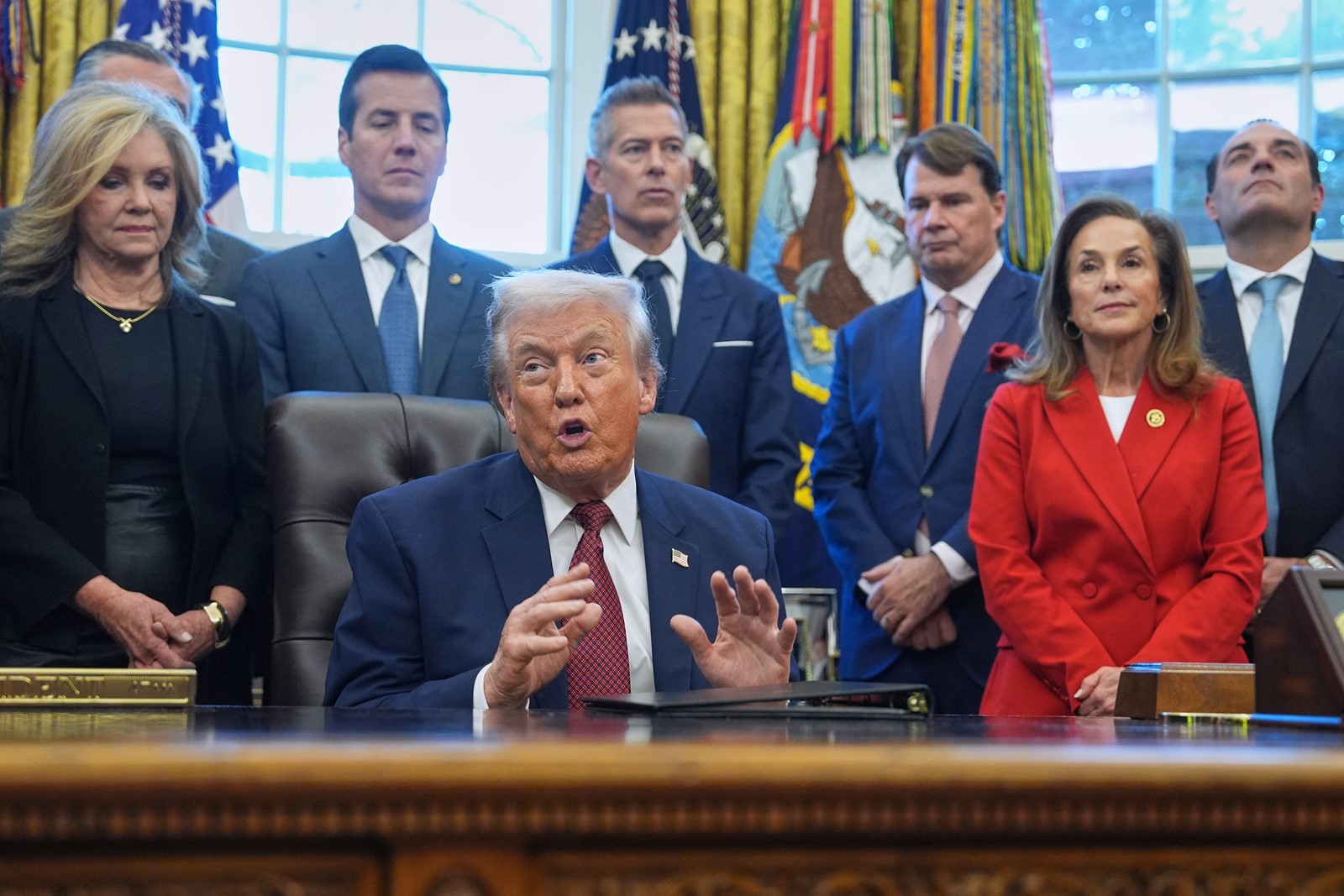
President Donald Trump speaks during an event on fuel economy standards in the Oval Office of the White House on Dec. 3, 2025, in Washington. Evan Vucci — The Associated Press.
By ALEXA ST. JOHN AND ANNE D’INNOCENZIO | THE ASSOCIATED PRESS
The Trump administration on Monday released new fuel economy standards that relax regulatory requirements for automakers to control pollution from gasoline-powered cars and light trucks. The new rules were released shortly after President Donald Trump rejected an Iranian proposal to open the Strait of Hormuz, sending oil prices soaring.
The change furthers Trump’s promise to revoke policies that encouraged or created incentives for the production of electric vehicles and ultimately, will expose Americans to more planet-warming pollution from vehicles.
Mileage standards, known as Corporate Average Fuel Economy, or CAFE, requirements, have been implemented since the 1970s energy crisis, and set out how far new vehicles need to travel on a gallon of gasoline. Over time, automakers have gradually improved their vehicles’ average efficiency.
The Department of Transportation and the National Highway Traffic Safety Administration estimated that the finalized standards would correspond to a combined industry fleetwide average of roughly 34.9 miles per gallon for passenger cars and light trucks in the 2031 model year. That’s up from 30.1 miles per gallon for model year 2024, but down from a projected 50.4 miles per gallon in 2031 under rules put in place by the Biden administration.
NHTSA had projected last December that the new standards would hover at roughly 34.5 miles per gallon.
The news comes amid ongoing tensions as the war in Iran persists, with Trump refusing a deal with Iran to open the Strait as recently as Saturday, impacting the world’s oil supply.
News of the revised standards immediately drew rebukes from environmentalists.
The DOT said Monday that the rule would cut yearly oil consumption in 2050 by about 1.3 billion barrels as compared to yearly oil consumption in 2024.
But when the 2024 standards went into effect, NHTSA estimated they would save 14 billion gallons of gasoline from being burned by 2050. The agency also said that while new fuel-efficient vehicles cost more up front, savings on gasoline over the lifetime of the car or truck would more than make up for that.
Environmental groups estimate now, without stricter standards, cars could produce 22,111 more tons of carbon dioxide per year than under the Biden-era rules in 2035.
The rule also translates to an extra 90 tons a year of deadly soot particles and 4,870 additional tons a year of smog components such as nitrogen oxides and volatile organic compounds emitted into the air in coming years, experts say.
It “ignores the feasibility of clean technology and the millions of fuel-efficient cars already on the road,” Dan Becker, director of the Center for Biological Diversity’s Safe Climate Transport Campaign, said of the rule.Automakers and industry groups have said the new rules will increase Americans’ access to the full range of gasoline vehicles they need and can afford.
“NHTSA made the right call to better align fuel economy standards with the law and current market conditions,” John Bozzella, president and CEO of the Alliance for Automotive Innovation, which represents the domestic auto industry, said in a statement. He said the previous standards “effectively required a switchover to electric vehicles that was out of step with market realities and customer demand. Today’s final rule is an appropriate course correction.”
 (0)
(0)
 0
0  0
0