Trump makes Venezuela Oil deal. Faces questions
He says U.S. has entered agreement to take 65 billion barrels of oil reserves.
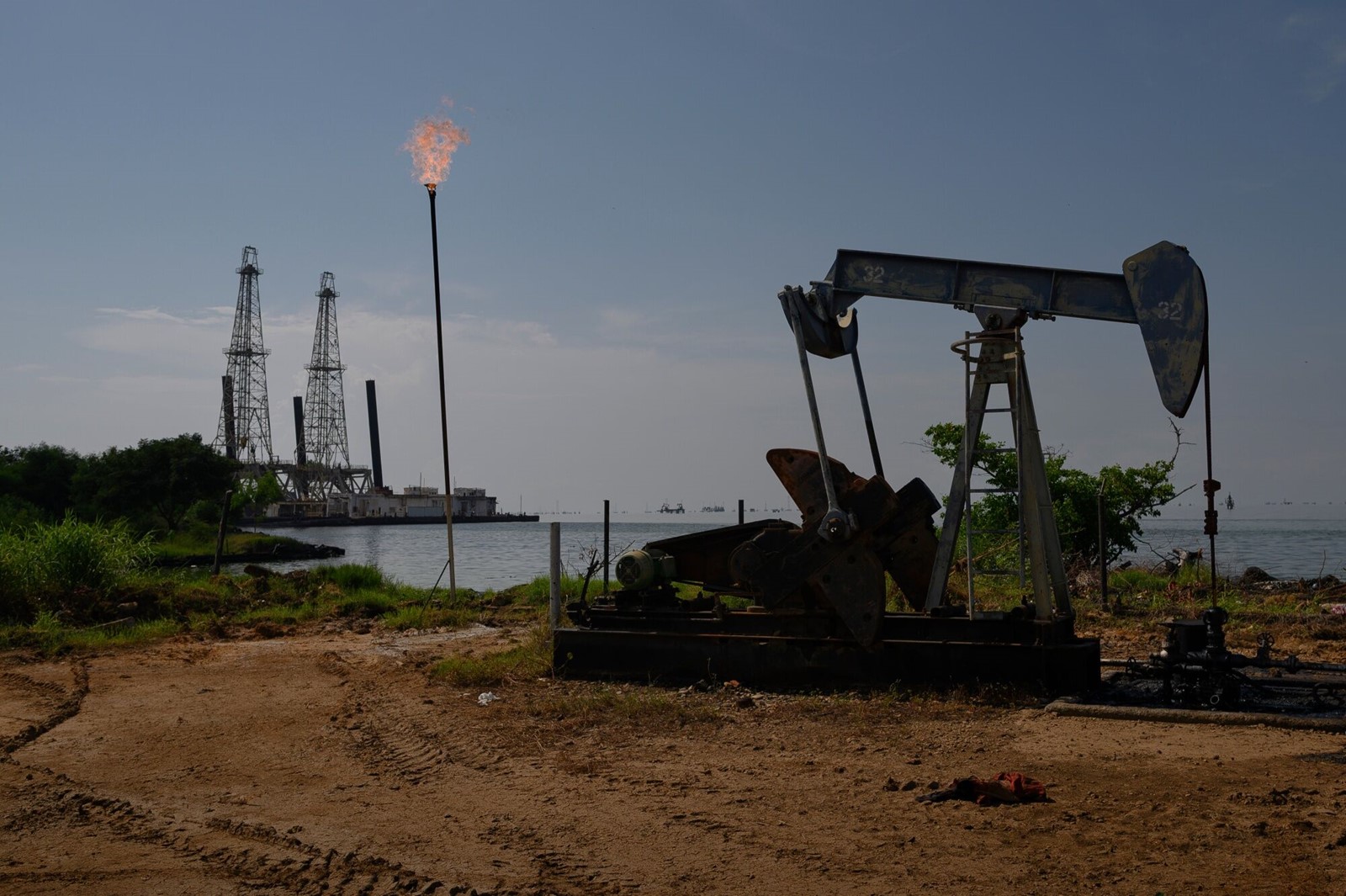
An oil pumpjack is seen in Cabimas, Zulia state, Venezuela. Gaby Oraa - Bloomberg.
By Mie Dahl | Bloomberg News
President Donald Trump is framing the deal for a U.S. stake in 65 billion barrels of Venezuelan oil as a victory that will lower gasoline prices and replenish depleted crude reserves. It's far from certain the plan will lead to either during his presidency- if at all.
Trump pushed for a blockbuster move after growing frustrated that private oil companies, including ExxonMobil Holdings Corp. and ConocoPhillips, weren't moving quickly enough to boost production in Venezuela, according to people familiar with the matter. By starting a new venture directly controlled by the U.S., his administration is seeking to give producers more confidence to commit to developing the 17 oil fields involved in the deal.
But the White House hasn't explained where the $100 billion in expected investment for the deal is supposed to come from. While Trump has been explicit that it won't be from taxpayers, the private operator working with the U.S. on the deal, North American Blue Energy Partners, isn't large enough to put that kind of money in by itself.
All those questions point to deeper concern that the deal may meet the same fate as some of Trump's other major initiatives - including the Gaza peace plan and an Iran ceasefire - that never came to fruition.
"It depends on who signs, if they are actually going to invest and, of course, what type of contracts are we talking about?" said Francisco Monaldi, director of Latin American energy policy at Rice University in Houston. "Most of these are not properly proven reserves."
The gap between the deal's immediate political value and its likely effect on oil supply is particularly important with November's midterm elections approaching, with the Trump administration under pressure to lower gasoline prices. The agreement gives Trump an energy win he can claim now, even though increasing Venezuelan output will require years and substantial capital, said Rebecca Bill Chavez, president and chief executive officer of the Inter-American Dialogue.
"The political narrative is running well ahead of what Venezuela can deliver at the pump in the near term," Chavez said.
The White House didn't immediately respond to a request for comment. Vice President JD Vance said Monday that rising production in Venezuela is one reason crude prices have not risen more recently.
Disruptions to supplies through the Strait of Hormuz have pushed up U.S. fuel prices ahead of November's midterm elections. The flurry of deals the Trump administration is pursuing is intended in part to show progress in Venezuela and deliver a political and market win as the war in Iran drags on, the people said.
Chevron Corp., the only U.S. oil major operating in Venezuela, is negotiating to add two heavy-oil fields to its existing operations there, while Bogota-based oil and gas producer GeoPark Ltd.'s plans are to take over the Bare field in the Orinoco Oil Belt, according to people familiar with the deals.
Hunt Oil Co., a privately held Dallas-based producer, has already signed an agreement to develop the Caro and Carisito fields. In a speech televised on Venezuelan state TV, acting President Deley Rodriguez also named Chevron, Repsol, Eni SpA, Shell Plc and BP Plc as companies expected to participate in additional oil and gas agreements.
 (0)
(0)
 0
0  0
0