Inflation slows, but things still seem expensive
Even with a small drop in June-July, costs still rising more quickly than wages.
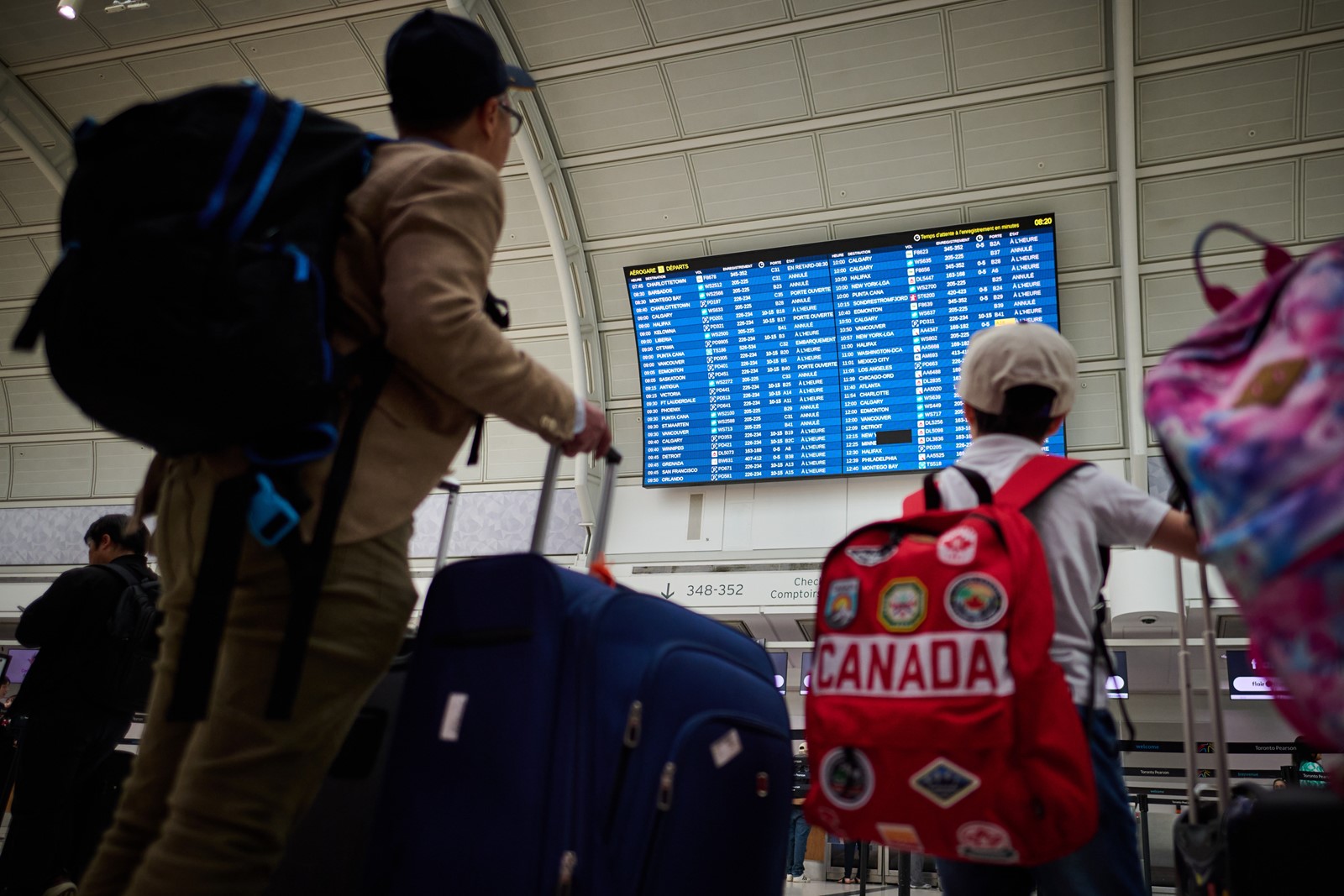
Travelers look at departures by the WestJet gate as the airline's flight attendants strike outside at Pearson International Airport in Toronto on Aug. 2. Sammy Kogan - The Canadian Press via AP.
By CHRISTOPHER RUGABER | THE ASSOCIATED PRESS
U.S. inflation declined slightly last month as the cost of gas and groceries slipped, though prices are still rising more quickly than before the Iran war, posing challenges for the White House as the midterm elections near.
Consumer prices increased 3.4% in July from a year ago, down slightly from 3.5% in June, the Labor Department said Wednesday. Inflation had fallen to 2.4% before the Iran war. On a monthly basis, prices rose just 0.1% from June to July.
The mild decrease is the second straight decline after sharply higher gas prices pushed inflation to 4.2% in May, a three-year high. Yet even with the pause, prices are still rising more quickly than average wages, underscoring the struggle many Americans have had paying for groceries, gas, and healthcare. And many costs grew last month, including airfares, computers, and used cars.
Excluding the volatile food and energy categories, core inflation slipped to 2.5% in July from a year ago, down from 2.6% in June. July's figure matches a post-pandemic low reached in January and February, before the Iran war.
Core prices rose 0.2% from June to July. Monthly increases at about 0.2% would be low enough over time to bring inflation closer to the Fed's 2% goal.
"America still has an inflation problem, but there are encouraging signs that price pressures outside of the gas pump are easing," Heather Long, chief economist at Navy Federal Credit Union, said.
Cooler inflation could also ease pressure on the Federal Reserve to raise their key interest rate to combat rising costs. Fed officials are sharply split over their next steps. Roughly half the members of the central bank's rate-setting committee support raising borrowing costs this year, while another half think rates are already high enough to slowly push inflation back to their 2% target.
"We're clearly not out of the woods, however it makes the Fed's decision a little bit easier, because now you see that inflation is creeping down," said Dan North, senior economist at Allianz Trade North America.
Inflation has been pushed higher by a series of shocks to the economy, including President Donald Trump's tariffs imposed last spring, higher gas prices stemming from the U.S attack on Iran, and a surge in investment in artificial intelligence infrastructure that has boosted computer chip prices. The key question for the inflation-fighters at the Federal Reserve - not to mention for consumers struggling with high gas and grocery prices - is how quickly those one-time effects will fade or whether they will lead to persistently rising prices.
 (0)
(0)
 0
0  0
0