Columbia: Rescue efforts grow desperate after deadly quake
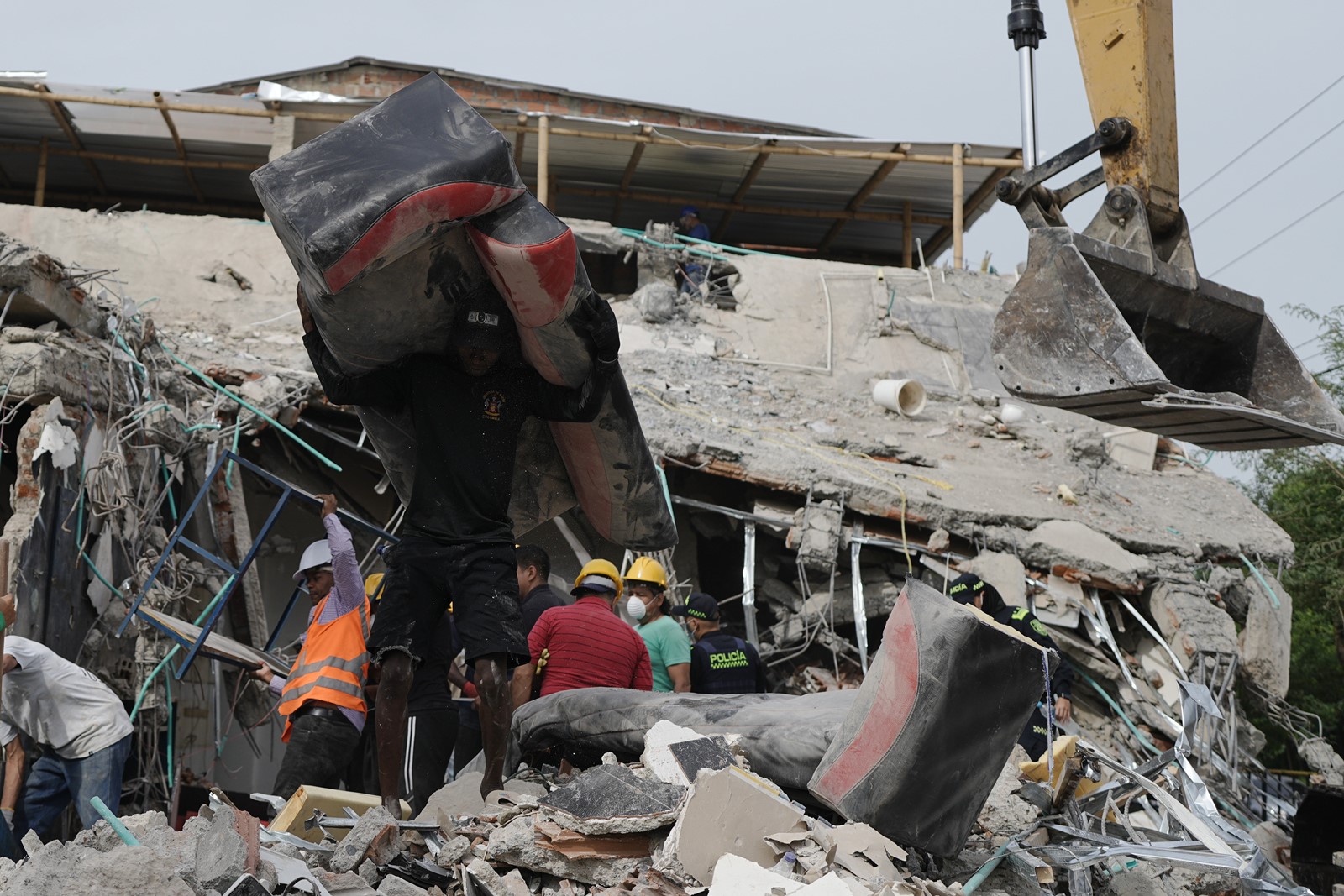
A group of workers remove debris from a damaged house two days after an earthquake struck Cali, Colombia, Wednesday. Ivan Valencia - The Associated Press.
By ASTRID SUAREZ, MEGAN JANETSKY AND MARKO ALVAREZ | THE ASSOCIATED PRESS
PEREIRA, Colombia - Tons of aid from regional partners began to roll into Colombia on Wednesday, as the search for survivors in the rubble of a powerful earthquake grew more desperate after the temblor razed buildings, buckled roads and crushed cars.
The devastation has tested Colombia's new president, Abelardo de la Espriella, and his government as it scrambles to respond to the disaster and civil society as it pushes to provide aid to the most affected communities.
De la Espriella said Wednesday evening that at least 265 people died in the 7.4 magnitude earthquake that struck the country's west on Monday. The president said nearly 500 people were reported missing, though civilian-run databases put that number at more than 4,100. In total, more than 25,800 families were impacted, de la Espriella said.
"Our efforts are focused on the disappeared," he told journalists in Colombia's capital.
Teams continued to pick through the rubble in the hardest-hit cities of Cali, Pereira, Manizales and Quibdo, as time ticked away forvictims to be found- and rescued- alive. Aid agencies consider the first 48 to 72 hours crucial for retrieving survivors, though that threshold can be extended if those trapped have access to food and water.
On Wednesday afternoon, Alejandro Eder, the mayor of Cali, told reporters that rescue teams continue to find signs of people alive under the rubble and are racing to save them.
"The next 20 hours are the most critical to find and rescue people alive," he said. "Every minute is vital."
In Pereira, rescuers pulled Daniela Largo alive from the rubble late Tuesday, capping a complex 12-hour rescue in which crews carved a small opening in the debris to free her pinned arm and a doctor administered IV fluids to stabilize her. Wrapped in a blue blanket, the young woman was carried to an ambulance as firefighters embraced and onlookers cheered.
Another moment was marked by mourning, as a man was pulled from a building in the same city, lifeless and covered in a white blanket.
Across the coffee-growing region, among the areas worst affected by the quake, authorities have converted sports arenas, schools and other public buildings into shelters for thousands of displaced Colombians.
Ebert Jonathan Morales, a Cali resident, said his family lost everything in the earthquake.
"My house was completely destroyed. We can't live there," Morales said. "It collapsed. The floor collapsed, the walls cracked. The roof came down."
In Pereira and Cali, families have been sleeping in parks - some fearing aftershocks or the collapse of their damaged homes, others without homes to return to.
Colombia's geological service has documented 130 aftershocks since the quake.
"We have the most important things: a roof over our heads, food, water and, in my case, medical care," said Edith Penagos, 48, who was staying with her teenage son in one of the white tents set up in a Pereira park.
In many areas, including the epicenter of the quake, Chaco, the official response to the disaster has been complicated by the ongoing crises of deep poverty and civil warfare that has created waves of forced displacement for decades. The true impact of the earthquake in the jungled northwest remained largely unknown because cell service has been lost and many of the likely affected communities are remote, accessible only by river.
 (0)
(0)
 0
0  0
0