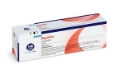
Ask Dr. Roach: PROVIDING MORE INFORMATION ABOUT REPATHA FOR CHOLESTEROL
DEAR DR. ROACH: I'm a 75-year-old woman who's in very good health. Since my early 50s, I've had issues with my cholesterol. My doctor has put me on several statins that caused very sore joints and muscle aches, to the point that I finally had to stop them. I felt that it just wasn't worth all the aches and pains.
My doctor decided to put me on the drug Repatha by self-injection every other week. This has worked amazingly well for me. I have no aches or pains from it, and we are both thrilled at my recent blood tests. I understand that Repatha is a fairly new drug. Do you have any information on it?
-P.E.
Answer: Repatha is in the class of drugs called PCSK9 inhibitors, which are very effective at lowering cholesterol. They were first approved in 2015. Most evidence supporting their use comes from studies in people who already have diagnosed heart disease. In this high-risk group, these drugs reduced the relative risk of having a heart attack, having a stroke, or dying from vascular disease by about 15%.
This sounds good, but I want to emphasize that the absolute risk benefit is roughly 2%, meaning that only about 2 people out of 100 wouldn't experience a serious event when taking the medicine, compared to people who didn't take the medicine. Another way of saying this is that 50 people needed to be treated with a PCSK9 inhibitor to prevent one bad outcome in three years. For people without known blockages in their blood vessels, the expected benefit would be considerably less.
No studies have been done using PCSK9 inhibitors in people who are at a low risk for heart disease. However, there was one recent study that looked at people who didn't have known blockages but did have diabetes, and it showed a similar benefit.
No studies have been done solely for women, but they were included in these studies as a minority of participants. An analysis of these studies suggest that women will have a similar reduction as men when it comes to a relative risk.
Statin drugs have a much larger evidence base supporting their use than PCSK9 inhibitors when it comes to preventing disease in higher-risk people without known blockages, as well as those who already have blockages. A review of 50,000 women who were studied in trials showed that statins are as effective at reducing a woman's relative risk for heart disease as they are with a man's. But the issue of women having a lower absolute risk means that just as with PCSK9 inhibitors, more women need to be treated with a statin to prevent a bad outcome than men of a similar age.
There are no head-to-head trials comparing PCSK9 inhibitors against statins, so I cannot definitively give an answer as to which is better. In my own practice, I continue to use statins as the first-line treatment in both men and women who are at an increased risk for heart disease.
The exact level of risk isn't fixed. A careful discussion about how much risk a person is willing to tolerate against their tolerance of a new medication is key in every patient, in whom medication treatment is considered to lower heart disease and stroke risk. If statins aren't tolerated, it is worth considering alternative medications, including ezetimibe, bempedoic acid and PCSK9 inhibitors.
Let me end by emphasizing how important lifestyle changes are. I've had many patients improve their blood pressure and cholesterol levels so much through their diet and exercise regimen that they no longer had enough of a risk for me to recommend medication.
Contact Dr. Roach at: ToYourGoodHealth@med.cornell.edu.

 (0)
(0)
 0
0  0
0